Schools are being asked to support more diverse learners than ever before. But most educators were never trained to interpret how neurodivergent students process, engage, and respond in real time.
So they do what all educators do. They interpret what they see and act in the moment.
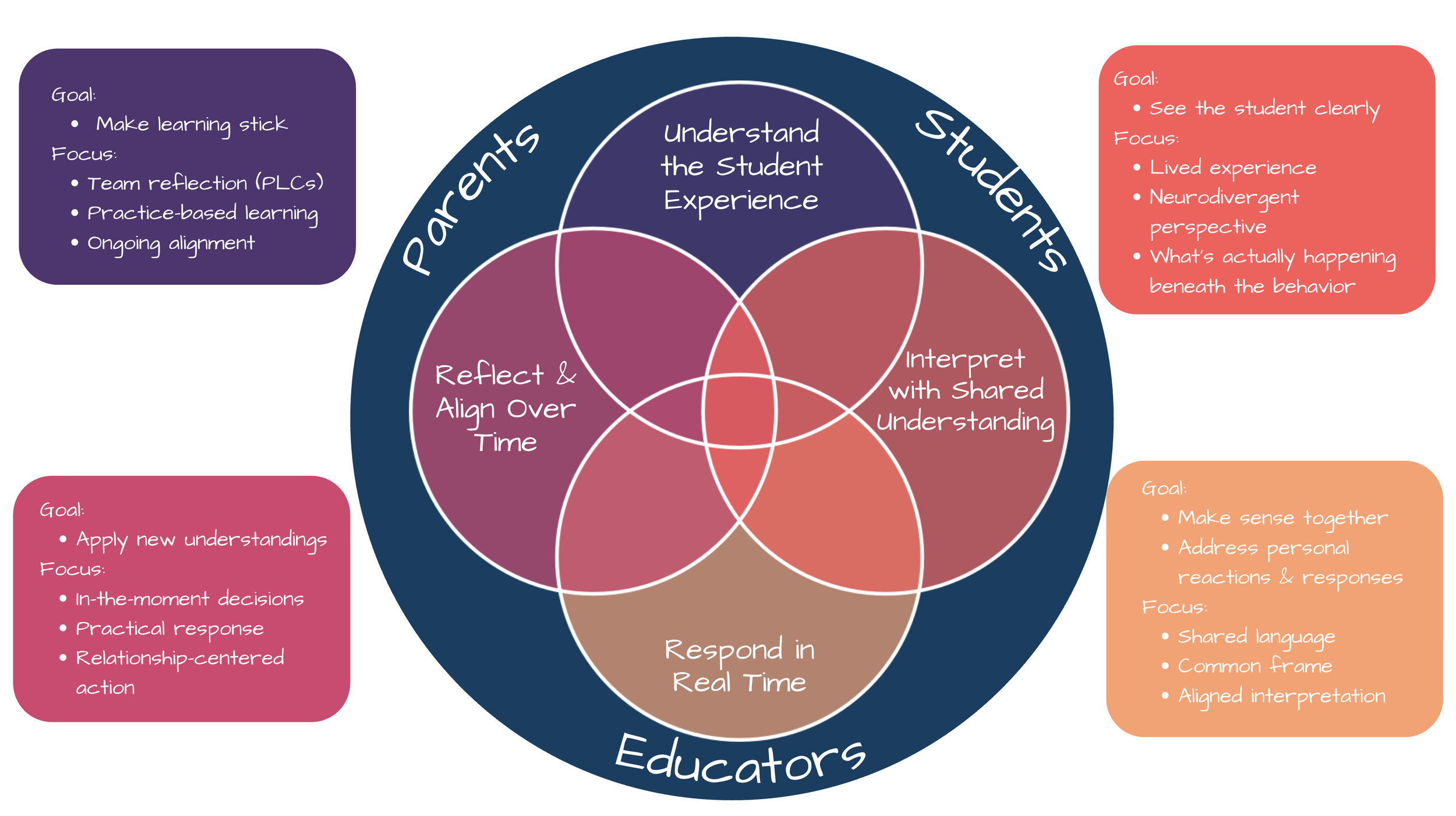
Peopling is a professional learning program that builds shared understanding between educators and families so that neurodivergent students experience consistent, informed support across school and home.
Unlike programs that train educators in isolation, Peopling aligns school and family learning from the same foundation, in parallel, toward the same student. The result is a change in how adults relate to neurodivergent young people, not just what they know about them.
Districts & Schools
Build shared understanding across your system—
so support actually works for neurodivergent students.

What makes neurodiversity professional learning actually stick?
“When educators share a way of understanding students, the constant weight of interpretation begins to lift. The work becomes clearer and more sustainable.”
Can Peopling work within our existing professional development structure?

Peopling is not a single training. It is a set of connected, differentiated micro-learning experiences that build shared understanding, carry it into practice, and align the adults around a student.
It integrates into existing PLCs, staff meetings, and PD days—showing up in real classrooms through courses, facilitation, guided PLCs, and reflection, with parallel learning for families.
The result is more consistent responses, more sustainable practice for educators, and more coherent support for students across school and home.
What are aligned funding sources?
This work is designed to fit within the professional development funding structures most districts already have.
We know that bringing meaningful professional learning into schools isn’t just about alignment — it’s about making it feasible within real funding structures. Peopling is designed to fit within existing district funding streams that support educator development, student support, and family engagement.
Common funding pathways include:
-
Peopling aligns with IDEA priorities for educator preparedness and family engagement. Districts may use IDEA funds to support professional learning that strengthens staff capacity to better understand and support neurodivergent learners.
-
Title II funds are often used for teacher and leader development. Peopling supports this by building educator skill in communication, relationships, and inclusive practices that directly impact student engagement and learning.
-
Peopling integrates easily into existing PD plans, PLCs, and staff learning cycles. District and school bundles are significantly more affordable than outside consultants or onsite trainers, and reusable across your team over time.
-
District and school-based funds focused on mental health, belonging, and student support can be used to support work that strengthens relationships and adult understanding of student experience.
-
Peopling's focus on understanding diverse learner experiences and aligning adult responses supports broader district goals around equity, inclusion, and culturally responsive practice.
We are happy to work within your existing professional development budget. Pricing is based on number of educator seats, scope of implementation, and level of support.
What does engaging with Peopling include?
an implementation with flexible micro-content
Micro-Courses & Guides
Build shared understanding
Short, focused micro-courses for educators that develop a deeper understanding of neurodivergence -- how it shows up in real moments, and what it means for learning, behavior, and engagement. Each course includes a companion guide to support reflection and application.
Team PLC Inquiry
Sustain the work over time
Structured PLC team-based use that fits into existing professional learning cycles. Supports ongoing reflection, shared language, and application across classrooms -- without adding a separate initiative.
Decks & Facilitator Guides
Time together
Ready-to-use session decks and facilitator guides designed for team-based learning. Supports staff meetings, PD days, and small-group conversations -- without requiring additional planning or design.

Parent Micro-Courses
Extended to families (free seats)
District bundles include aligned parent guides at no additional cost. Families engage with the same core ideas and language as educators, building continuity between school and home.
Professional Services
For schools looking for deeper support, we partner alongside teams to shape strategy, reflect on practice, and coach leaders as they build more neuroinclusive environments.
Depending on scope, we can also facilitate professional learning and workshops with teachers, staff, well-being support, administrators, and parents.
Is there evidence that Peopling works?
Peopling is built on over 30 years of work with neurodivergent learners, led by award-winning educator Mike Haykin across public and private school settings, as well as in family coaching. It is grounded in psychological and educational research and shaped through ongoing field testing and piloting with educators, parents, kids and school teams.
Across pilots, clear patterns have emerged: educators interpret behavior with greater precision, families shift how they respond in challenging moments, and students experience more consistent, informed support across school and home.
Our current district partnerships are designed to continue building formal outcome data at scale.

Research Partner Program
A limited number of schools and districts are invited to engage as Founding Research Partners.
Partner districts receive access to the full Peopling program, structured implementation support, and preferred pricing -- in exchange for contributing outcome data and practitioner feedback that shapes the next phase of development. This is designed implementation with a research purpose, not a trial. It is the right entry point for districts that want to move thoughtfully and contribute to building the evidence base for neuroinclusive professional learning.
What a pilot partnership looks like
Duration: Typically 3 months - a full academic year
Participants: A defined group of educators, teams, or sites
What you get:
Full access to micro-courses and guides
Facilitation and implementation support
Additional check-ins and reflection structures
Preferred pricing in recognition of your role as a founding partner
What we ask:
Honest practitioner feedback during and after implementation
Outcome data that helps shape the next phase of the work

What your district gains
A shared foundation for understanding neurodivergent learners
Increased educator confidence and more nuanced responses in the classroom
Greater consistency in language and approach across teams
Insight into how the work integrates with your existing systems
A clear, supported pathway into sustained implementation
Preferred pricing and direct input on how the product develops
Solo Educators & Mental Health Practioners
Are you a solo teacher or mental health practitioner looking for quality micro-courses authored by experts in the field?
Whether it is for the flexibility of anytime, anywhere professional enrichment or simply you need clock hours, we have you covered.
Visit to catalog for an ever-expanding set of simple and easy options.